
Are Tankless Water Heaters Really Worth It, or Are They Overhyped?
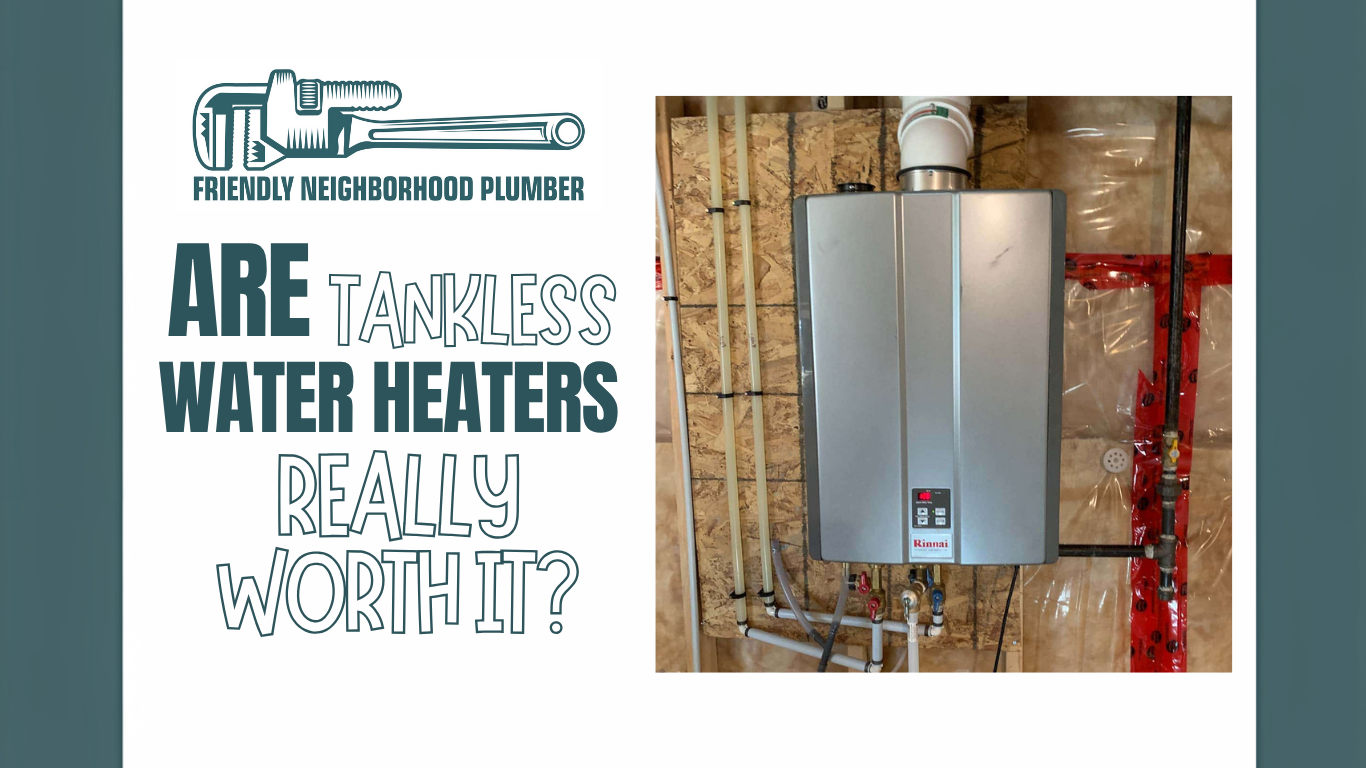
Let’s be honest. Tankless water heaters get talked about like they are the answer to every hot water problem.
Endless hot water! Lower utility bills! More space! Never run out again!
That all sounds great, but tankless is not automatically the best choice for every home or every budget.
The short answer
A tankless water heater can absolutely be worth it if your household uses a lot of hot water, you plan to stay in your home for several years, and your home can support the installation without major upgrades.
It may be overhyped for someone who wants the cheapest replacement, has fairly low hot water use, or would need expensive gas line, venting, electrical, or plumbing changes to make it work.
At Friendly Neighborhood Plumber, we do not believe in recommending tankless just because it is the newer, shinier option. We look at how your family actually uses hot water, what your home can support, and what makes sense for your budget.
How does a tankless water heater work?
A traditional water heater stores hot water in a tank and keeps it warm until you need it. A tankless water heater heats water as it passes through the unit when you turn on a hot water fixture.
That means you are not paying to keep a full tank of water hot all day. It also means the system can continue producing hot water for a long shower, as long as the unit is properly sized and you are not asking it to supply more fixtures at once than it can handle.
And that brings us to an important point: endless hot water does not mean unlimited hot water everywhere at the same time.
A tankless unit still has a maximum flow rate. If someone is showering while the dishwasher and washing machine are running, an undersized unit may struggle. Proper sizing matters just as much as the brand you choose.
What are the biggest benefits of a tankless water heater?
1. Longer-lasting hot water
This is usually the biggest reason families want tankless. You are not limited to the amount of hot water stored in a tank, so back-to-back showers are much less likely to end in somebody yelling because the water turned cold.
For larger families, busy mornings, big soaking tubs, or frequent houseguests, this can be a huge quality-of-life upgrade.
2. Better energy efficiency
Tankless systems heat water only when you need it, which reduces the standby energy loss that happens when a tank keeps water hot around the clock.
That can lower energy use, but I want to be very clear: the monthly savings usually do not erase the higher installation cost overnight. The value is often a combination of efficiency, comfort, longer equipment life, and convenience.
ENERGY STAR estimates that a certified gas tankless water heater can save a family of four about $95 per year compared with a standard gas storage water heater. Your actual savings will depend on your hot water use, fuel costs, the unit, and how well the system is installed and maintained.
3. More usable space
Tankless water heaters mount on a wall and take up much less room than a traditional tank. If your current water heater is taking up valuable space in a closet, garage, utility room, or basement, this can be a big advantage.
4. A longer expected lifespan
According to ENERGY STAR, gas tankless water heaters can have a life expectancy of around 20 years when properly maintained. That is longer than many traditional tank-style water heaters.
The words properly maintained matter here. Knoxville and the surrounding areas can have mineral buildup that affects the unit over time. Regular flushing and maintenance help protect the heat exchanger and keep the system working efficiently.
5. Less risk of a large tank leak
Because there is no large storage tank holding 40 or 50 gallons of water, you remove the risk of that tank eventually rusting through and releasing all of its water. A tankless unit can still leak or need repairs, but it does not fail in the same way a corroded storage tank can.
What are the downsides of going tankless?
1. The upfront cost is higher
This is the biggest drawback for most homeowners. The unit itself costs more, and converting from a traditional tank may require additional work.
Depending on the home, that could include:
Upgrading the gas line
Changing the venting
Adding an electrical outlet or dedicated power
Rerouting water lines
Installing a condensate drain
Updating other parts of the system to meet current code
This is why an in-home evaluation is important. A quote based only on the price of the unit will not tell you the true installed cost.
2. Tankless water heaters still need maintenance
Tankless does not mean maintenance-free. Mineral scale can build up inside the heat exchanger, especially if the home has hard water or the unit is not flushed regularly.
Your plumber should explain the recommended maintenance schedule based on your water quality, the manufacturer’s instructions, and how heavily your household uses the unit.
3. The unit has to be sized correctly
If the system is too small, it may not keep up when several hot water fixtures are used at once. A plumber should consider your household size, bathrooms, appliances, incoming water temperature, desired temperature rise, and peak simultaneous use.
Choosing the biggest unit is not always the right answer either. The goal is to install the right system for the home.
4. It may not be the fastest or cheapest emergency replacement
If your tank is leaking and you need hot water restored quickly, a similar tank-style replacement may be simpler and more affordable. A rushed emergency is not always the best time to redesign the entire water heating system.
If you are interested in tankless, it is smart to explore your options before your current water heater fails.
Tankless vs. tank water heater: Which one is better?
Neither option wins for every household.
Tankless may be a better fit if you...A tank may be a better fit if you...Have a larger household or frequent back-to-back showersWant the lowest upfront replacement costPlan to stay in the home long enough to enjoy the benefitsUse a fairly small amount of hot waterWant to free up floor or closet spaceNeed a simple replacement as quickly as possibleAre willing to keep up with routine maintenanceWould need major upgrades to support tanklessWant long-term comfort and efficiencyPrefer a familiar, straightforward system
Does a tankless water heater provide instant hot water?
Not necessarily. Tankless means the water is heated on demand. It does not mean hot water instantly appears at a faucet on the other side of the house.
You may still wait for the cooled water sitting in the pipes to reach the drain before hot water arrives. A properly designed recirculation system may reduce that wait, but it is a separate feature that should be discussed during the estimate.
How much does a tankless water heater cost in Knoxville, Tennessee?
There is no honest one-price-fits-all answer. The installed cost depends on the unit, fuel type, household demand, installation location, gas supply, venting, electrical needs, plumbing changes, permits, and whether you are replacing an existing tankless system or converting from a tank.
The best way to compare options is to get an evaluation that includes the full scope of work. Ask what is included, what upgrades are required, what maintenance the unit needs, and what warranty comes with the equipment and installation.
So, are tankless water heaters worth the money?
For the right household, yes. Tankless water heaters can offer longer-lasting hot water, better efficiency, more space, and a longer service life.
But they are not magic, and they are not automatically the smartest financial choice for every homeowner.
Our honest recommendation is this: choose tankless because it fits your home and the way your family lives, not because someone told you it is always better.
If you are comparing a traditional tank with a tankless water heater in Knoxville or the surrounding area, Friendly Neighborhood Plumber can walk you through both options. We will look at your home, explain what each choice really involves, and help you decide without pressuring you into the most expensive option.
Because that is what neighbors do.
Frequently Asked Questions About Tankless Water Heaters
Can a tankless water heater run out of hot water?
A properly sized tankless water heater can keep producing hot water as long as water and energy are available. However, it can be overwhelmed if too many fixtures demand hot water at the same time.
How long does a tankless water heater last?
ENERGY STAR says gas tankless water heaters can have a life expectancy of around 20 years. Water quality, usage, installation, and regular maintenance all affect the actual lifespan.
Do tankless water heaters lower utility bills?
They can reduce energy use because they do not keep a tank of water hot all day. Actual savings vary based on household usage, fuel rates, equipment efficiency, and installation.
Do tankless water heaters need to be flushed?
Yes. Flushing helps remove mineral scale from the heat exchanger. The right schedule depends on the unit, manufacturer guidance, local water quality, and household use.
Can I replace my traditional water heater with a tankless model?
Usually, but the home may need gas line, venting, electrical, plumbing, or drainage changes. An on-site evaluation is the best way to determine what the conversion requires.
Is a tankless water heater good for a large family?
It can be an excellent option for a large family, especially when showers happen back to back. The unit must be sized for the household’s peak simultaneous hot water demand.
Does tankless mean instant hot water?
No. Tankless means water is heated on demand. The distance between the unit and the faucet still affects how long it takes hot water to arrive unless a recirculation solution is included.
