
Turning Your Garage Into the Ultimate Man Cave

Turning a garage into a man cave sounds simple. Add flooring, a TV, a mini fridge, and you are done.
But if we’re being real… most of the problems we see don’t come from what you add.
They come from what was already there.
Garages are where a lot of your home’s working systems live. Water heaters. Shut-offs. Pressure regulators. Filtration systems. Drainage. Venting.
So when you turn that space into something livable without thinking through those pieces first, things can get uncomfortable fast.
This guide walks through the most common things homeowners overlook, including zoning, ventilation, drainage, plumbing prep, and yes, even garage door setup.
Why Garage Man Cave Projects Go Wrong
Garages weren’t designed for people. They were designed for cars.
Which means they’re missing the things that make a space feel comfortable and function properly long term.
What we see happen all the time is:
Homeowners start with the fun stuff. Flooring. Walls. Paint. Furniture.
But the systems underneath didn’t get planned first.
That’s when issues show up:
Temperature swings
Moisture buildup
Plumbing access problems
Drainage doing weird things you didn’t expect
And once everything is finished, fixing it becomes way more expensive than doing it right the first time.
Zoning and Code Rules Homeowners Overlook
Before anything gets built, you have to know what you’re allowed to do.
Garages are treated differently than living spaces, especially when plumbing is involved.
Things that get missed:
Restrictions on adding bathrooms
Requirements for access to water heaters and shut-offs
Clearance rules for mechanical systems
Fire separation between garage and home
If you’re enclosing or moving anything that controls water in your home, it needs to stay accessible and up to code.
This is one of those areas where planning early saves you from redoing work later.
Ventilation and Air Quality Problems
Ventilation is one of the biggest differences between a garage that looks good and one that actually feels good to be in.
And once plumbing is involved, it matters even more.
Water heaters, humidity, future sinks or bathrooms… all of that adds moisture to the space.
Common mistakes:
Thinking opening the garage door is enough
Not planning for moisture at all
Fans that aren’t properly vented
When that air has nowhere to go, you end up with condensation, stale air, and eventually bigger issues.
Good airflow planning makes a huge difference in how the space holds up over time.
Drainage and Plumbing Planning Mistakes
If there’s one thing that causes the most frustration later, it’s this.
Garage floors are sloped to push water out. That’s great for a garage… not great when you’re trying to treat it like interior space.
So when plumbing gets added without planning for that slope, problems show up.
Common mistakes:
Skipping rough-in plumbing before flooring
Not planning for venting
Cutting into the slab after everything is finished
Not thinking through where water is actually going
Even if you’re not adding a bathroom right now, planning for it early is one of the smartest things you can do.
It keeps your options open without tearing everything back apart later.
The Stuff Already in Your Garage (That You Shouldn’t Ignore)
This is the part most people don’t think about until it’s too late.
Your garage is usually home to some of the most important plumbing systems in your house:
Water heater
Pressure reducing valve (PRV)
Main water shut-off
Filtration or softening systems
Exposed water lines
When you finish the space, it’s really easy to:
Box those in
Cover them up
Or make them hard to access
And those are the exact things you need to get to quickly if something ever happens.
If it controls water to your home, it should stay easy to reach. Always.
How the Garage Door Fits Into All of This
The garage door still matters, just maybe not in the way most people think.
It’s not just about opening and closing. It affects:
Temperature inside the space
Noise levels
How air moves in and out
It also impacts layout.
Track placement, ceiling clearance, and how much usable space you actually have all play into where plumbing, ductwork, or storage can go.
Upgrading to an insulated garage door and a quieter opener can help with comfort, especially if you’re using the space regularly.
But it works best when it’s planned alongside everything else, not as a separate decision.
Designing for a Future Bathroom or Wet Bar
A lot of people plan to “add it later.”
And you can… but later usually means:
Cutting concrete
Opening walls
Reworking everything you just finished
Planning ahead looks like:
Running rough-in drain and water lines
Planning vent routes
Leaving space for access and fixtures
Even if you never use it, having it in place gives you flexibility without the headache.
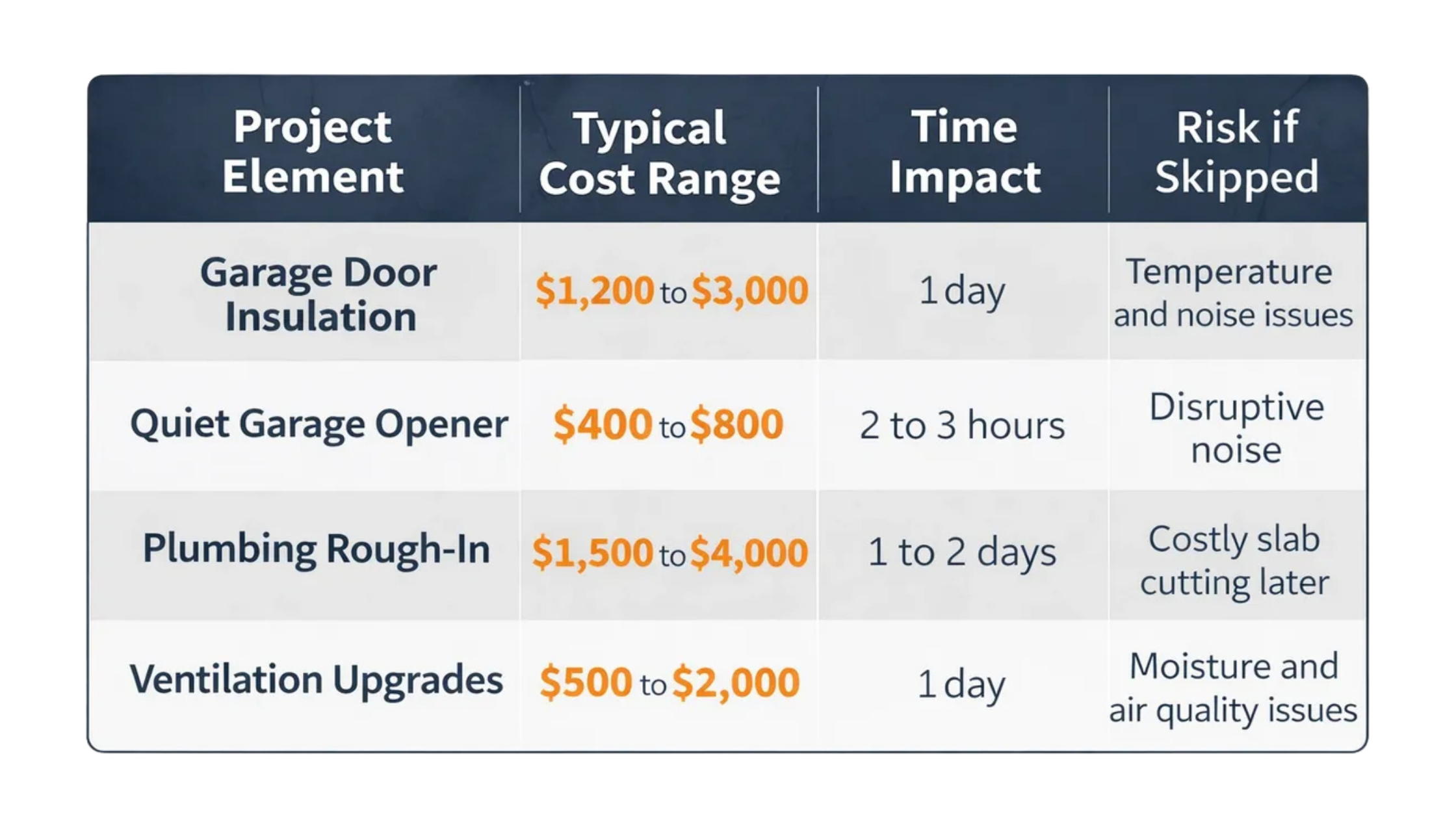
Cost, Time, and Risk Breakdown
Best Practices Before You Start
If you want this space to actually work long term:
Check zoning and code requirements first
Keep water heaters, PRVs, and shut-offs accessible
Plan drainage and plumbing before flooring goes in
Treat ventilation like it’s a living space
Coordinate everything together, not in pieces
Then upgrade things like the garage door to support comfort
FAQs
Can I add a bathroom to my garage man cave?
It depends on local codes. Some allow it, some don’t. Always check before planning.
Do I need an insulated garage door?
It helps with temperature and noise, especially if you’re using the space often.
Is plumbing rough-in really worth it if I’m not adding a bathroom now?
Yes. It saves a lot of time, money, and mess later.
What happens if I don’t plan around my existing plumbing?
You risk blocking access to important systems and making future repairs harder than they need to be.
What plumbing services do you offer?
We help with everything from repairs to planning layouts, rough-ins, drainage, and making sure systems are set up right before walls and floors get closed in.
Key Takeaways
Most problems come from what’s behind the walls
Plumbing systems in garages need to be planned around
Drainage and ventilation matter more than most people expect
Garage doors affect comfort, but they’re just one piece
Planning early saves you from expensive fixes later
Final Thought
The best garage man caves aren’t just about how they look… they’re about how they’re planned.
If you’re trying to make the space comfortable year-round or figure out how everything is going to fit, especially with ceiling space and door tracks, it’s worth talking to someone who does garage doors every day. Good Day Garage Doors can help you get that part right from the start.
And before everything gets closed in, having someone look at your plumbing, drainage, and layout can save you a lot of headaches later. That’s where Friendly Neighborhood Plumber comes in.
📞 865-443-7617
🌐 865fnp.com
